 Ask "ISI"
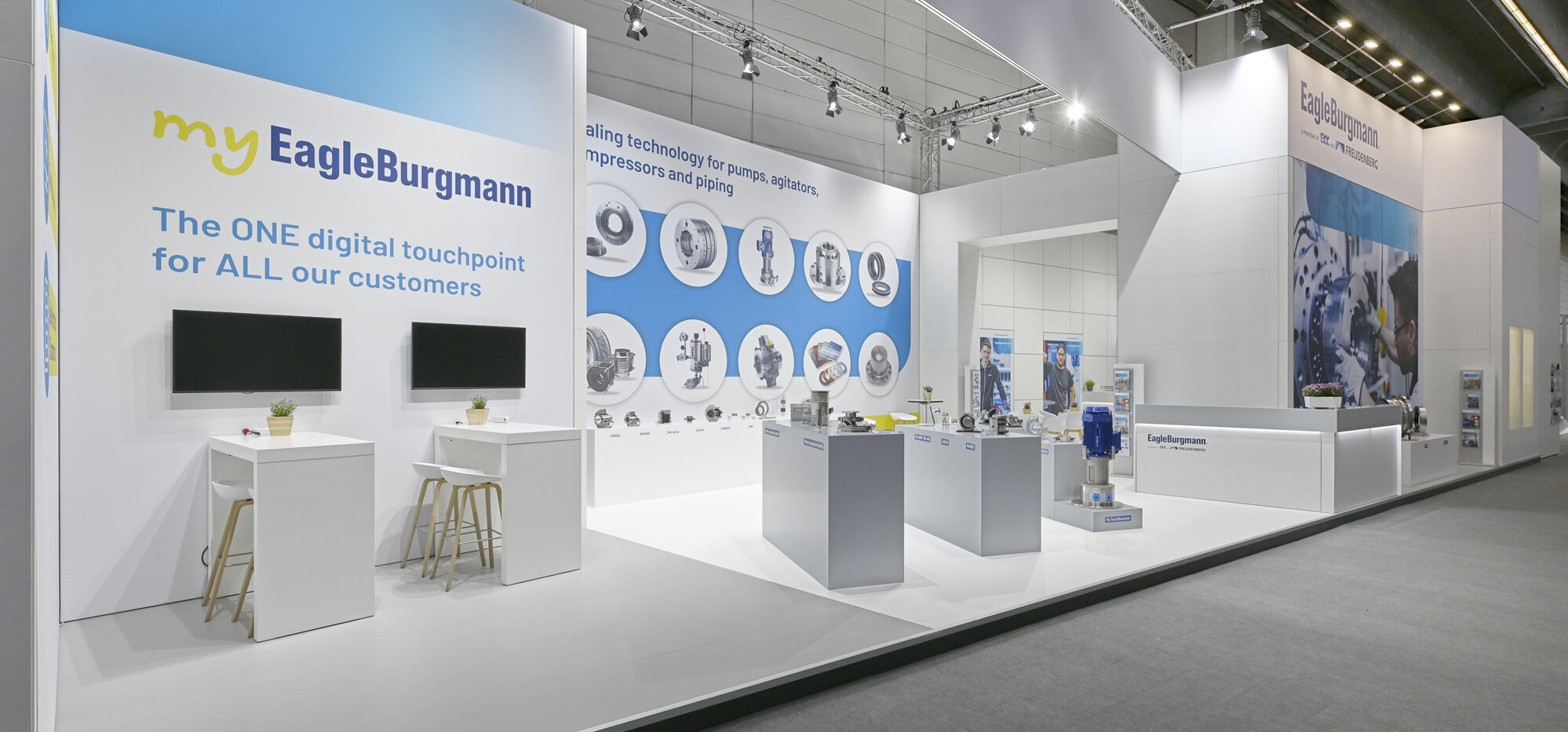
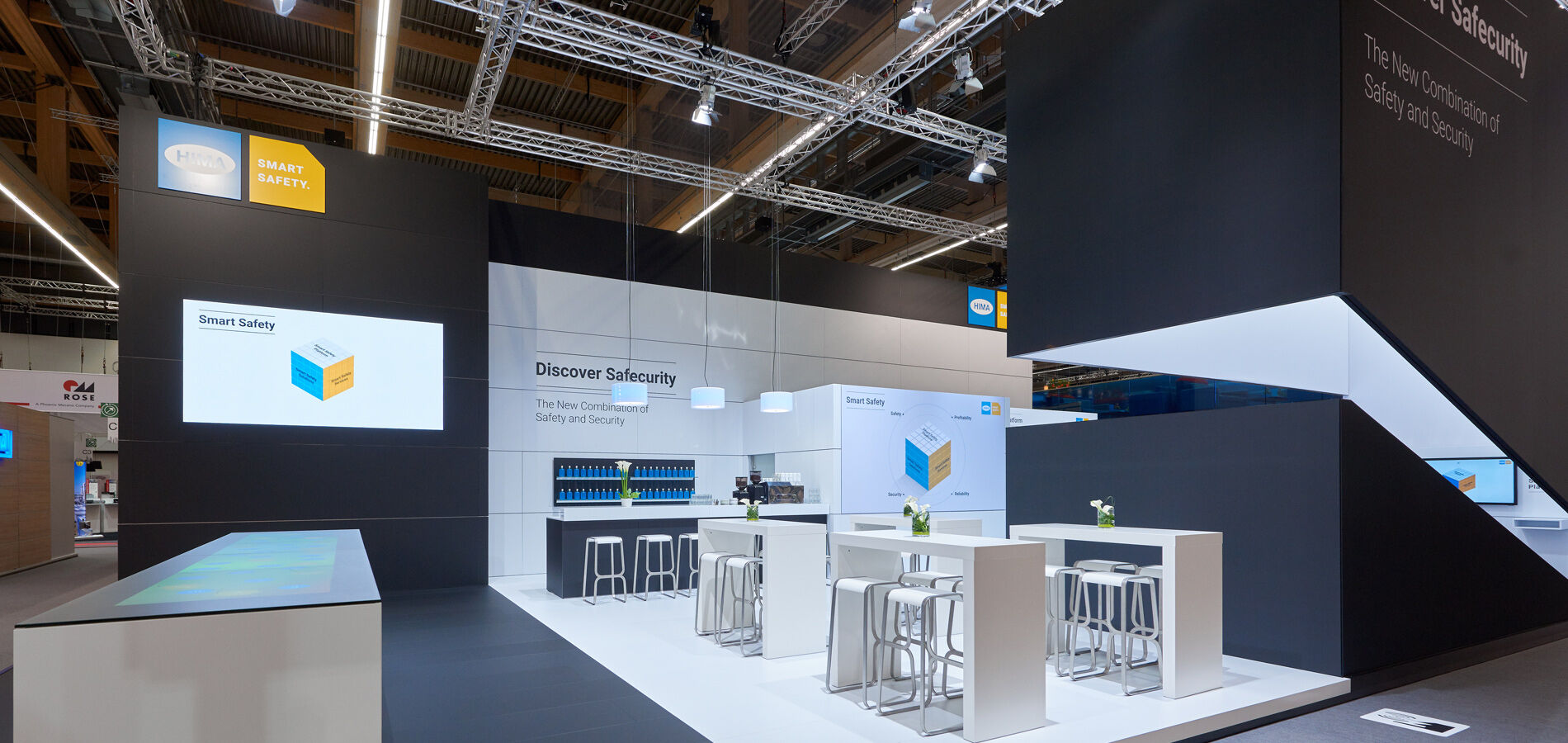
ACHEMA in Frankfurt am Main brings together technologies and services for the life sciences and process industries. This presents exhibitors with a particular challenge when it comes to communication: many products are technically complex, processes are not visible during operation, equipment is too large for the stand space, or digital services do not have a self-explanatory physical exhibit at all. The first step is to clarify the brand, target audiences, key message, exhibits and the type of discussions sought.
Requirements for the trade fair stand
ACHEMA brings together eleven exhibition groups. These include plant engineering and energy technology, laboratory and analytical technology, measurement, control and process control technology, pharmaceutical, packaging and storage technology, mechanical and thermal processes, pumps, valves and materials technology, safety technology and occupational health and safety, research and innovation, and digital topics. As a result, very different forms of product and service communication come together.
A plant engineering firm may need to explain an entire system using just a few physical components. A laboratory equipment supplier can demonstrate a piece of equipment directly. A supplier of automation software, on the other hand, must make a digital process comprehensible, as it remains abstract without an application context.
The implication for stand planning is this: it is not the quantity of information displayed that is crucial, but rather a clear hierarchy comprising brand, expertise, application, exhibit and conversation.
Depending on the exhibition segment, technical experts, end-users, operators, planners, project managers, procurement staff and management may ask different questions about the same solution. An exhibition stand should therefore offer information at various levels of depth.
The stand’s appearance from a distance must first and foremost convey its technical relevance. From a medium distance, the product, application or area of expertise should become clear. Technical details belong where a visitor can consciously delve deeper: at exhibits, demonstration points, media displays or in technical discussions.
This tiered approach prevents two extremes: a stand that looks attractive from a distance but offers little technical explanation, and a stand that is already overloaded with detailed information right from the aisle.
Exhibition stand planning for ACHEMA
That depends on the communication objective. A single flagship product can serve as a strong physical focal point. In the case of extensive portfolios, system solutions or engineering services, however, the overarching expertise is often more important. The decision should therefore not be ‘brand or product?’, but rather:
What message must a visitor understand first, and which exhibit best illustrates that message?
ISINGERMERZ derives the spatial design from the brand’s DNA, target audience, message and product logic. This ensures that a technically impressive exhibit does not simply attract attention whilst the connection to the brand remains unclear.
Not everything that is available should be included automatically. Particularly with broad product ranges, an excessive density of exhibits can make it difficult for visitors to find their way around. A sound planning approach is as follows:
1. The central message of the trade fair presence
2. The flagship exhibit or solution
3. Complementary product or expertise areas
4. In-depth information via media and specialist discussions
This ensures that the stand does not become a walk-in product catalogue. Instead, it guides visitors from the relevant message to the appropriate level of detail.
As soon as it is established that heavy, large, tall, moving or operational exhibits are to be used, these requirements must be incorporated into the stand design at an early stage.
During the registration process, ACHEMA asks, amongst other things, for the height and floor load of planned exhibits, as well as whether a two-storey structure is planned. This shows that these factors are relevant from the outset, not just during set-up.
The practical implication is this: a large exhibit should not be retrofitted into a finished stand design. Transport routes, positioning, floor load, connections, safety distances and sightlines can determine the basic structure of the stand.
Showcasing products, processes and digital services
First, a decision is made as to which part of the system best illustrates its core functionality. This could be a real component, a functional section, a cutaway model or a combination of an exhibit and a visualisation. It is important that the section is not presented in isolation. Visitors must understand where they are in the overall process, what role the component plays and what benefits the overall solution offers.
A scaled-down model is therefore not automatically better than a real component. The decisive factor is which representation conveys the relevant technical message most credibly.
Invisible processes require a visible cause-and-effect logic. A meaningful representation answers the following questions in turn:
- What goes into the process?
- What happens?
- Which component or technology performs which task?
- What is the output?
- What benefit does this bring to the application?
Animation, process diagrams, real components and digital visualisation can complement one another. However, the technology should serve to explain the process. A spectacular animation with no clear link to the real-world process attracts attention, but does not automatically lead to understanding.
A user interface on its own rarely explains the value of a digital solution. A concrete use case is better. Rather than simply showing a dashboard, the presentation should make it clear which system or process is being monitored, which data is relevant, what decision is made as a result, and how the software contributes to the process. This transforms a screen into a comprehensible use case.
A live demonstration is worthwhile if it conveys a key product benefit more quickly or credibly than a static display. It should not be used simply because a product can, in principle, be demonstrated. In the case of moving or operational exhibits, there are additional technical and safety-related requirements. ACHEMA has set out specific requirements and designated points of contact for the presentation and safety of exhibits.
For this reason, a live demonstration must be planned from the concept stage onwards, taking into account the safety zone, operator position, visitor distance, media supply and sequence of events.
Visitor guidance and communication
A visitor should not have to read every piece of information to work out whether a stand is relevant to them. Effective visitor guidance therefore begins with an information hierarchy:
- Level 1: Recognise the brand and area of expertise from the aisle.
- Level 2: Identify the product, application or solution.
- Level 3: Understand the exhibit or process.
- Level 4: Explore technical details in greater depth.
- Level 5: Speak to the appropriate contact person.
Architecture, graphics, lighting and media should support these levels, rather than competing with one another for attention.
An open stand facilitates spontaneous visits and is ideal when the focus is on exhibits and initial contacts. More secluded areas are useful when longer project discussions, confidential topics or focused presentations are expected.
For many ACHEMA exhibitors, a combination of these approaches makes sense: open technical contact points along the aisle, clearly identifiable demonstration or product areas, and quieter zones for in-depth discussions.
It is not possible to give a serious answer to this question using a blanket percentage figure. What matters is the number and type of meetings expected. A company that conducts many short product consultations requires different space to a plant engineering firm, where meetings last longer and involve several specialists.
Therefore, before planning the space, it is important to clarify what types of meetings are actually likely to take place.
Technology and practical planning at ACHEMA
In the case of large or heavy exhibits, it is not only the dimensions on the stand that are relevant. The following points, in particular, must be checked:
- Access route
- Hall entrance
- Floor load
- Load distribution
- Position on the stand area
- Connections
- Assembly sequence
- Subsequent removal
The ACHEMA technical guidelines require appropriate verification for relevant structures and loads. The permissible conditions vary depending on the hall level. Therefore, the specific hall allocation forms part of the technical assessment. Important for planning: the exhibit can serve as a fixed point around which the stand is designed.
According to the latest ACHEMA exhibitor information, single-storey hall stands may be erected under certain conditions without the need to submit planning documents. If defined size or height limits are exceeded, or if special structures are used, approval and acceptance requirements apply.
Cases explicitly mentioned as requiring approval include, amongst others, two-storey stands and special structures. Closed ceilings, certain elevated structures, glass structures, raised platforms or moving components may also be relevant, for example.
In terms of design, this means that building height, ceilings, platforms, glass, moving components and special structures should not be subject to technical review only after the design has been finalised. The applicable technical guidelines issued by ACHEMA are decisive for the specific project.
Two-storey stand structures are possible on certain hall levels. Whether they are a sensible option for an exhibitor is another matter. A second storey can create additional space for meetings or hospitality and help to spread out the different functional areas. At the same time, this increases the requirements in terms of structural engineering, escape routes, fire safety and planning permission.
The decision should therefore be based on space requirements and the communication concept, and not solely on the desire for maximum building height.
The maximum permitted stand height varies depending on the hall. In its exhibitor information, ACHEMA specifies a minimum stand height and points out that the maximum stand height varies depending on the hall. Additional restrictions apply to certain smaller stand areas; suspended elements must be considered separately.
In terms of design, this means that the desired visual impact from a distance must not be based on an assumed stand height. The stand area, hall and technical specifications must be checked first.
Project workflow and collaboration with the stand builder
The following information is helpful:
- Stand area and layout, if available
- Hall and stand number, as soon as known
- Corporate identity and brand guidelines
- Target audiences
- Key message
- Products and exhibits
- Dimensions, weights and technical requirements of relevant exhibits
- Desired demonstrations
- Required meeting scenarios
- Existing stand components or elements to be reused
Not everything needs to have been finalised yet. It is precisely the unresolved issues that should be addressed during the initial consultation.
ISINGERMERZ begins by asking what should link the brand and the target audience at ACHEMA. From this, the message, information hierarchy, exhibit logic and spatial functions are derived.
Design and technical planning are then carried out in tandem. Exhibits, media supply, construction, manufacturing, logistics and implementation must all align with the same concept. Particularly in the case of technically sophisticated ACHEMA stands, this integration reduces the risk of a design concept later coming into conflict with the practical requirements of the exhibit or the hall.
Frankfurt is ISINGERMERZ’s home market. The company’s headquarters and in-house production facilities are located in Wiesbaden; the Frankfurt exhibition centre is therefore part of the regional trade fair environment with which the company regularly engages.
Further questions from ACHEMA exhibitors
In principle, stand components and design elements can be planned in such a way that they can be reused in other layouts and stand configurations. Whether this is advisable depends on future trade fair appearances, stand sizes, exhibits and brand requirements.
Reuse should therefore be taken into account as early as the concept phase. A modular concept only makes sense if it continues to fulfil the communication objectives for the trade fair in question.
Sustainability extends beyond visible materials. Design, reuse, transport, storage, material separation and the service life of components all influence the overall planning.
For technically sophisticated ACHEMA stands, it is particularly interesting to consider which brand-defining components, media modules and presentation elements can be retained for future exhibitions and adapted to new stand layouts.
What does this mean for the ACHEMA exhibition stand?
An ACHEMA exhibition stand does not need to simplify technical complexity to the point where technical substance is lost. Its role is to organise that complexity. To this end, the brand, target audience, application, exhibit and information are arranged into a clear spatial hierarchy. In the case of large or operational exhibits, technical constraints come into play which may already influence the design.
ISINGERMERZ combines this strategic and technical planning with design, project management, production and implementation. The result for exhibitors is a trade fair stand that does not begin with the architecture, but with the question of what the relevant target audience should understand, experience and explore in more depth through conversation.
